
Juniata River Flood Season and Your Dumpster Rental
The weather risk that actually shapes dumpster scheduling in the Huntingdon area is river flooding and winter ice, not high wind. Here's what that means before and after delivery.
Huntingdon dumpster guide
Shingles are heavier than they look, and a roof with more than one layer changes the math fast. Here's how to size the container correctly for a Huntingdon-area tear-off.
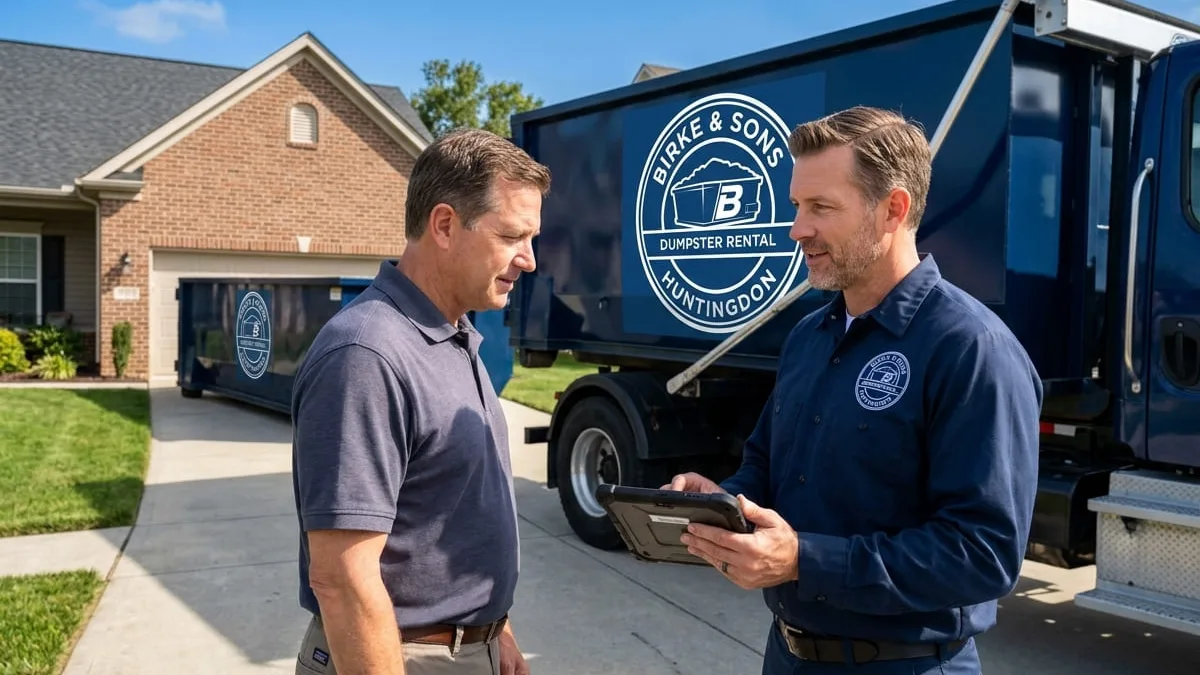
A roof tear-off is one of the most weight-driven jobs a dumpster ever sees. On most residential projects, volume is the limiting factor — the container fills up before it gets heavy. Roofing debris flips that around. Asphalt shingles are dense, and a pile of tear-off material that doesn’t even look like it’s filled half the box can already be pushing the weight limit. Getting the sizing right before the crew shows up saves everyone a headache on tear-off day, when there isn’t time to wait around for a size change.
Roofing is measured in “squares,” where one square covers 100 square feet of roof. Asphalt shingles run heavy per square, and a full tear-off — shingles, old underlayment, flashing, and any nails and debris that come off with them — adds up fast. A modest-looking roof can generate several tons of material once it’s actually piled in a container, which is exactly why roofing jobs get sized around weight allowance first and visible space second. If you’re used to thinking about dumpster size in terms of how much stuff will physically fit, roofing is the project type where that instinct can lead you astray.
As a general guide, a 20 yard container is a common choice for a single-layer asphalt shingle tear-off on an average Huntingdon-area home. That covers a lot of standard residential roofs comfortably. Where it gets tighter is multi-layer roofs: it’s fairly common on older homes in and around Huntingdon Borough for a previous re-roof to have gone directly over an existing layer rather than tearing it off first. If your roof has two layers coming off, or if the roof is unusually large or steep, sizing up to a 30 yard dumpster is usually the safer call so the crew isn’t stuck with a container that’s maxed out on weight before the job is finished. If you’re not sure how many layers are up there, that’s worth checking with your roofing contractor before you book — it’s a five-minute question that can save a mid-job container swap. Our broader sizing guide walks through the same weight-versus-volume logic for other project types if you want the fuller picture.
A tear-off almost never produces just shingles. Old flashing, drip edge, ridge and roof vents, damaged decking boards being replaced, and the packaging from new roofing material all add to the load, and all of it is fine to include in the same container as the shingle tear-off itself. If gutters, fascia, or siding are being replaced as part of the same project, mention that when you book so the size accounts for the combined debris rather than the roof alone. Our roofing dumpster rental service is built around exactly this kind of job, including the weight allowance that a straight residential cleanout container wouldn’t need.
Roofing debris comes off the roof fast once a tear-off starts, often thrown or dropped rather than carried down, which means the placement spot takes some abuse. Positioning the container as close to the house as the driveway or yard reasonably allows helps the crew work efficiently, and it’s standard practice to have boards or plywood laid under the container’s rails to spread the load and protect the surface underneath — particularly relevant on older asphalt or concrete driveways, which describes a fair number of driveways in Huntingdon’s older neighborhoods. If landscaping, a mailbox, or a low tree limb sits anywhere near the likely delivery path, it’s worth flagging that when you book so the truck has a clear approach.
Most tear-offs move quickly — often a single day for an average home — so the container doesn’t need to sit on site for long. What matters more is that it’s there and ready before the crew starts, since a mid-tear-off wait for delivery is expensive dead time for a roofing crew that’s already on the clock. Confirm your delivery window a day or two ahead of the scheduled start date, and let us know if the job is likely to run past a single day so pickup can be planned around the actual finish rather than a guess.
Not every roofing job in the Huntingdon area is a planned remodel. Ice dams are the real seasonal driver of unplanned reroofs here — when melting snow refreezes at a cold roof edge or over an unheated eave, water can back up under shingles and work its way into the roof deck, and a bad enough ice dam season can force a repair or tear-off onto a much shorter timeline than an owner had planned for. Freeze-thaw cycles through a Juniata Valley winter are hard on aging shingles generally, which is part of why late-winter and early-spring calls for roofing tear-offs tend to pick up once the thaw sets in. If that’s the situation you’re in, our same-day dumpster rental option can get a container on site fast, and the same sizing logic in this guide still applies once the tear-off itself is underway.
Every container we rent comes with a weight allowance built in, and roofing is the project type most likely to actually reach it, which is exactly why sizing generously up front matters more here than on a typical cleanout. If a crew is partway through a tear-off and the container is visibly full of debris but nowhere near its stated capacity in cubic yards, that’s usually a sign the weight limit is the real constraint, not the box size — and it’s a good reason to call about a swap or a second container rather than trying to pile shingles higher than the rails, which isn’t something a hauling truck can safely take on the road regardless of weight. Flagging a two-layer tear-off or an unusually large roof when you book is the easiest way to avoid running into this mid-project.
If you’re not sure which size applies to your roof, the simplest approach is to tell us the approximate square footage and how many layers of shingles are currently up there, and we’ll recommend a size based on that. Call us at (814) 907-3647 and we’ll help you land on the right container before delivery day, based on your roof’s actual size and layer count rather than a generic guess.
FAQs
A 20 yard container is a common choice for a single-layer asphalt shingle tear-off on an average home. Larger roofs or a second layer of shingles often push the job toward a 30 yard container instead.
Asphalt shingles are dense. A pile of tear-off material can weigh far more than it looks like it should for its size, which is why roofing jobs are sized around weight allowance first rather than visible space, unlike most general cleanout projects.
Yes. A second layer roughly doubles the tear-off weight compared to a single layer, which can be the difference between a 20 yard container being enough and needing a 30 yard, or a mid-job container swap if the box fills before the crew finishes.
We use boards or plywood under the container’s rails as standard practice to spread the load and protect the surface underneath, which is especially worth doing on older asphalt or concrete driveways that may already show wear.
Yes. Melting snow that refreezes at a cold roof edge can back water up under shingles and into the roof deck, and a bad ice dam season is a common reason for an unplanned reroof in the Huntingdon area. Our same-day dumpster rental can get a container on site quickly if that happens to you.
Confirm your delivery window a day or two before the scheduled tear-off date so the container is on site and ready before work begins. If the timeline is urgent, ask about same-day delivery instead.
Ready when you are
Call and you will speak to someone local who knows the streets, the permit rules and which box actually fits your lot. Flat rate quoted up front.
Keep reading
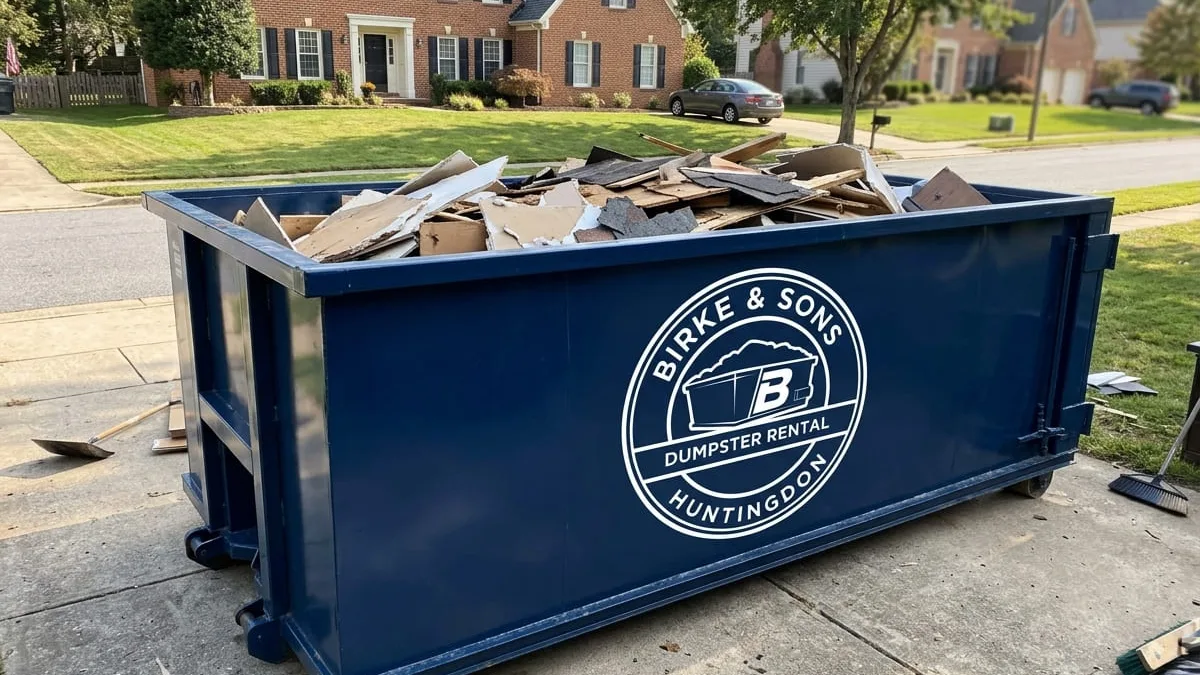
The weather risk that actually shapes dumpster scheduling in the Huntingdon area is river flooding and winter ice, not high wind. Here's what that means before and after delivery.
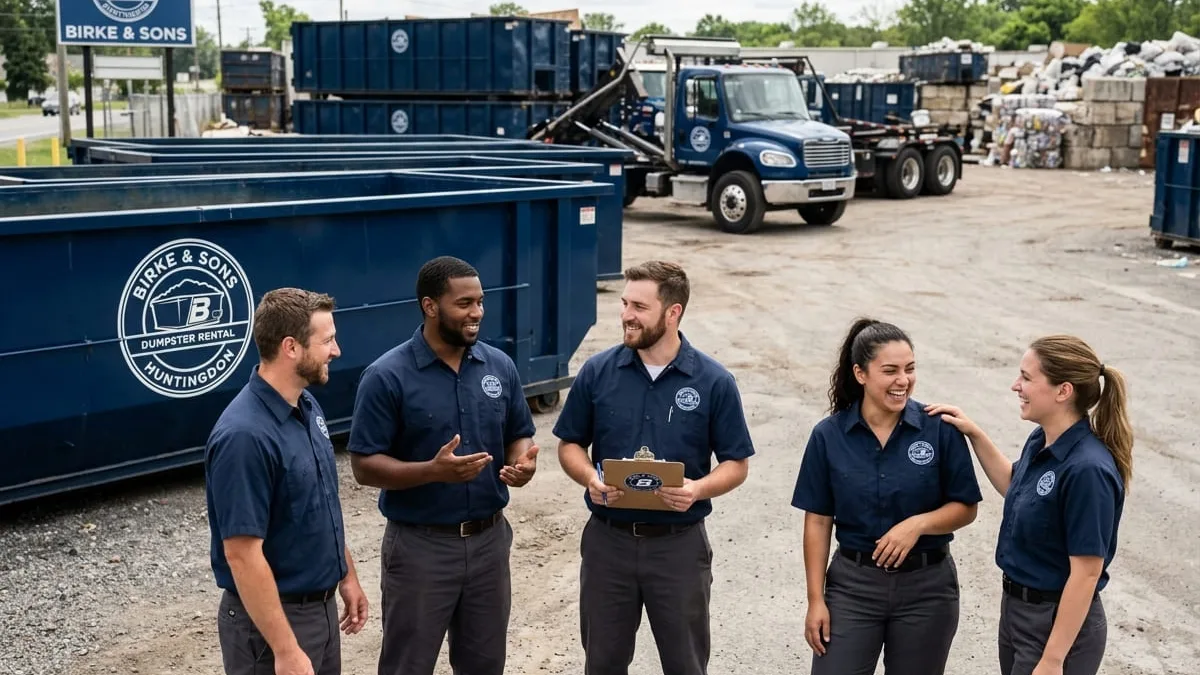
Older lots near downtown Huntingdon often have less room to work with than a newer property outside the borough. Here's how to plan a placement that actually works, and when the Borough's permit rules apply.
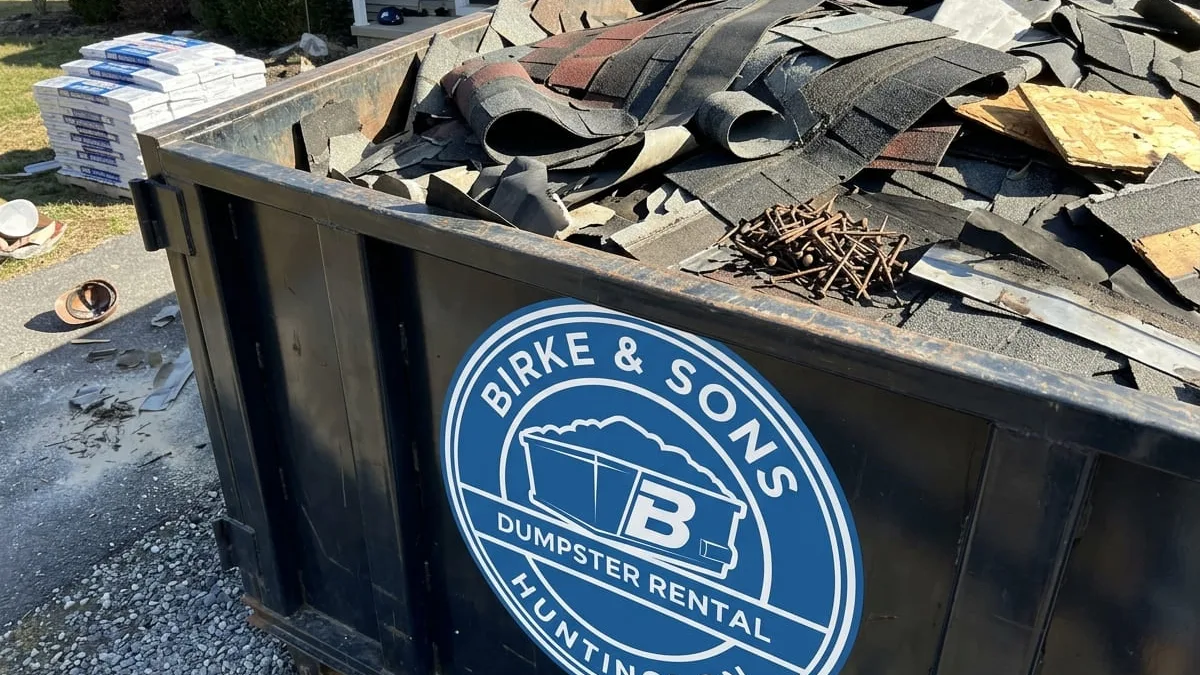
Recycling and disposal questions come up on almost every dumpster rental. Here's what's actually confirmed for Huntingdon County, and what genuinely can't go in a dumpster under Pennsylvania law.