Recycling and disposal questions come up on almost every dumpster rental, so it’s worth laying out plainly what’s actually confirmed about how Huntingdon County handles it — and being honest about what isn’t. This guide sticks to what we can actually verify rather than guessing at programs that may or may not exist.
Huntingdon County Recycling as a Resource
Huntingdon County Recycling is the county-level resource for recycling questions in the area, and it’s the right first call if you want to confirm what a specific site or program currently accepts. We don’t have a confirmed, published list of every material accepted at every drop-off point to hand you here, and we’d rather point you to the source than guess at specifics we can’t verify. If you’re trying to divert a particular material — construction debris, appliances, scrap metal — a quick call to Huntingdon County Recycling before your project starts is the most reliable way to know what’s currently possible.
Who Regulates What
At the state level, the Pennsylvania Department of Environmental Protection — PA DEP — is the agency that regulates solid waste management across Pennsylvania, including landfill operations and the statewide disposal rules described below. Huntingdon County Recycling and any local drop-off sites operate underneath that state framework but are a county-level service, not a state one. If you’re ever unsure whether a rule is local practice or a state requirement, that’s generally the dividing line: day-to-day drop-off logistics are the county’s business, and the disposal bans described below are state law.
What Pennsylvania Law Actually Bans From Landfills
Two Pennsylvania laws matter most for a typical dumpster rental. The Covered Device Recycling Act (Act 108 of 2010) bars computers, monitors, and televisions from landfill disposal statewide — this is a real, enforced ban, not a suggestion, and it means none of these items can go in a rented dumpster under any circumstances. They need to go to a certified electronics recycler instead. The Waste Tire Recycling Act (Act 190 of 1996) similarly restricts landfilling of whole waste tires, and lead-acid batteries and used motor oil are restricted from general disposal under Pennsylvania’s broader solid-waste rules as well. None of these four categories — electronics, tires, batteries, used oil — belongs in a dumpster, regardless of what else is happening with the project.
Where the Banned Materials Actually Go
Because these categories come up often enough on real projects — especially cleanouts, garage clear-outs, and property cleanups — it’s worth spelling out where each one actually goes instead of a dumpster. Electronics: a certified electronics recycler is the required route under the Covered Device Recycling Act; many take common household electronics at no cost. Whole tires: most tire retailers and some auto shops accept old tires, often for a small handling fee, specifically because the state ban creates ongoing demand for that service. Lead-acid batteries: auto parts stores and battery retailers commonly accept these, and many will do so free since the lead and acid are both recoverable. Used motor oil: auto parts stores and service shops with oil-recycling programs are the standard drop-off point.
What Belongs in a Dumpster and What Doesn’t
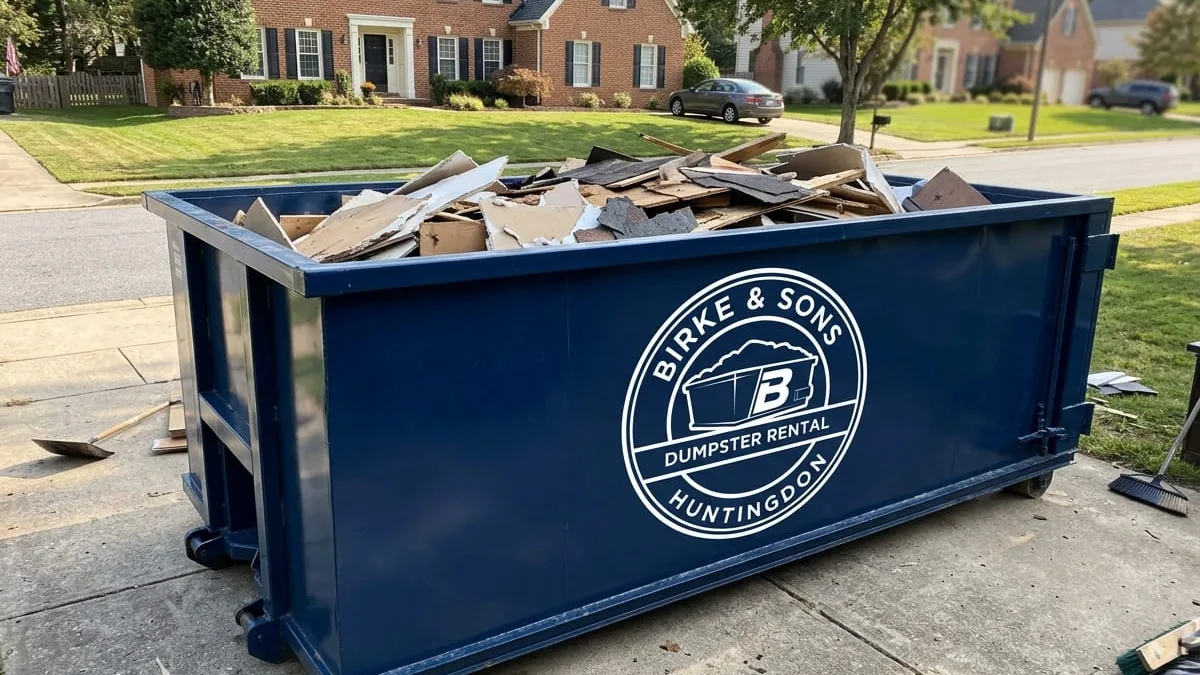
For most residential and construction projects, general debris — drywall, wood, flooring, old furniture, mixed demolition material — is exactly what a rented dumpster is for, and none of it needs to be sorted for recycling before it goes in. A few categories are worth handling separately, though. Ordinary household recyclables — cardboard, aluminum cans, glass and plastic bottles — don’t need to go in a roll-off dumpster at all; they’re better taken to a local recycling drop-off point, since mixing them into a debris container just means they end up landfilled anyway. Yard waste — brush, limbs, grass clippings, leaves — often has its own diversion options separate from general debris disposal; our own yard waste service is built around exactly that kind of material if you’d rather not mix it into a general debris container. Our guide to what can and can’t go in a dumpster covers the broader list of accepted and prohibited materials in more depth.
Construction and Demolition Debris
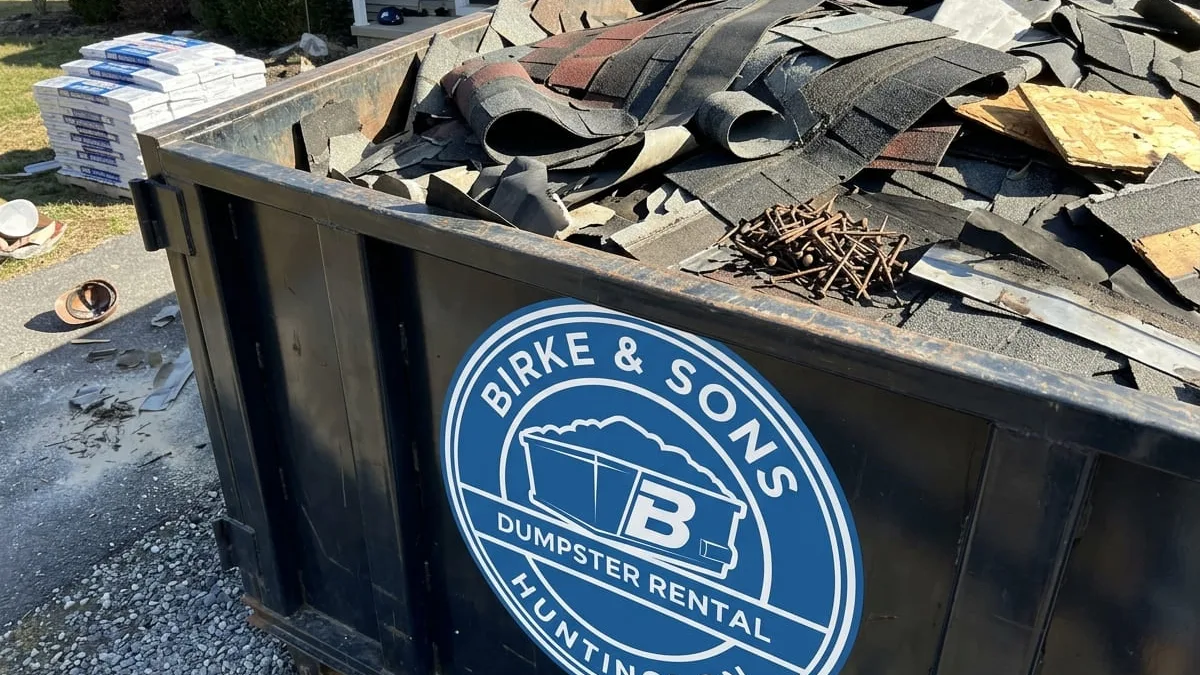
We don’t have a confirmed, dedicated construction and demolition (C&D) recycling program on record at the county level in Huntingdon County. If diverting material like clean wood, concrete, or metal from a renovation or teardown matters to your project, it’s worth calling Huntingdon County Recycling directly to ask what, if anything, is currently accepted, rather than assuming a program exists that we can’t confirm. In the meantime, our construction dumpster rental and demolition debris services are built to handle mixed C&D material as general debris.
What This Means for a Typical Project
For the vast majority of dumpster rentals we handle — a home cleanout, a renovation, a construction project, an estate cleanout — the practical takeaway is straightforward. General debris goes in the dumpster. Recyclables that would normally go in a household recycling bin don’t need to, and generally shouldn’t, end up mixed into a debris container. Electronics, tires, batteries, and used oil need their separate paths regardless of what else is happening with the project, since Pennsylvania law bars all of them from ordinary landfill disposal. Everything else has better options than a mixed-debris dumpster even where no law strictly requires it, and diverting it there tends to leave more usable room in the container for material that actually needs to go to a landfill.
Questions About a Specific Material?
If you’re planning a cleanout or renovation and aren’t sure whether something belongs in the dumpster, in a separate recycling stream, or at a specific drop-off point, it’s easier to ask before the container fills up than to sort it out afterward. Call us at (814) 907-3647 and we’ll help you sort out what goes where before the container arrives, and point you to Huntingdon County Recycling directly for anything we can’t confirm ourselves.